
Sisal vs. Seagrass vs. Jute Carpet: Which Natural Fiber is Best for Dubai Homes?
Ever stood in front of three natural carpets and thought, “Okay… they all look the same, but why do they feel so different?” That’s kinda how most people feel the very first time they see sisal, seagrass, and jute. At first glance, everything seems to fit under Natural fiber carpets UAE, but then you actually touch it, you walk around on it, and you try using it inside a Dubai home, and suddenly the whole story changes more than you’d expect. Between the heat, the humidity, and that steady day-to-day foot traffic across the UAE, this decision matters more than it first looks. Honestly, it’s kinda bigger than it seems at first glance, though you might not notice right away.
This guide is more like a simple walk-through, nothing too complicated. No heavy terms, no confusing talk. We’ll break down how each fiber behaves in real homes, how they react to Dubai weather, and what kind of spaces they actually fit. By the end, you’ll have a clearer idea of what works for your floor and what doesn’t really suit your lifestyle here in Dubai.
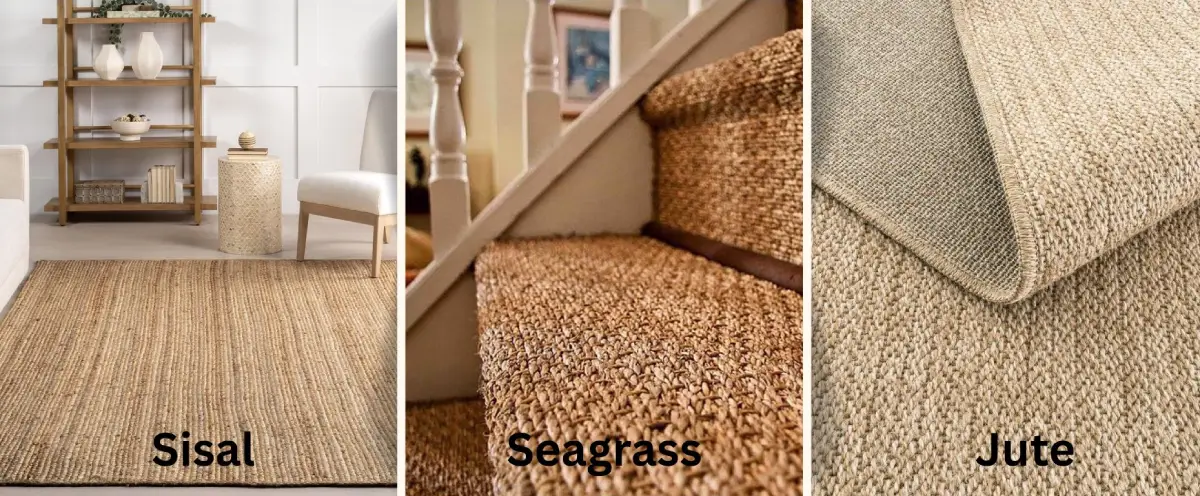
What Sisal Carpet Feels Like in Real Homes
Sisal Carpet comes from agave plant fibers, and you can usually kind of feel that natural roughness right away. It doesn’t really try to be soft or fluffy, more like a firm thing. It feels more grounded, a bit firm under the feet, and very “natural” in its behavior. People usually pick it when they want something simple and clean without too much shine or an artificial look.
In Dubai homes, sisal works more like a visual statement than a comfort carpet, you know, in that way it kind of stands out. It handles dry indoor spaces well, but it is not the type of carpet you would really expect to feel soft when walking barefoot. It fits better in spaces where design matters more than softness.
- Firm texture that feels steady under daily walking without the softness of synthetic carpets.
- That natural, rough kind of look kinda fits those simple Dubai interiors with the light and neutral color vibe.
- It works best in low-moisture indoor areas, where the air conditioning keeps everything stable, and the space stays consistent.
- Not focused on softness, but gives a strong, natural character to flooring design.
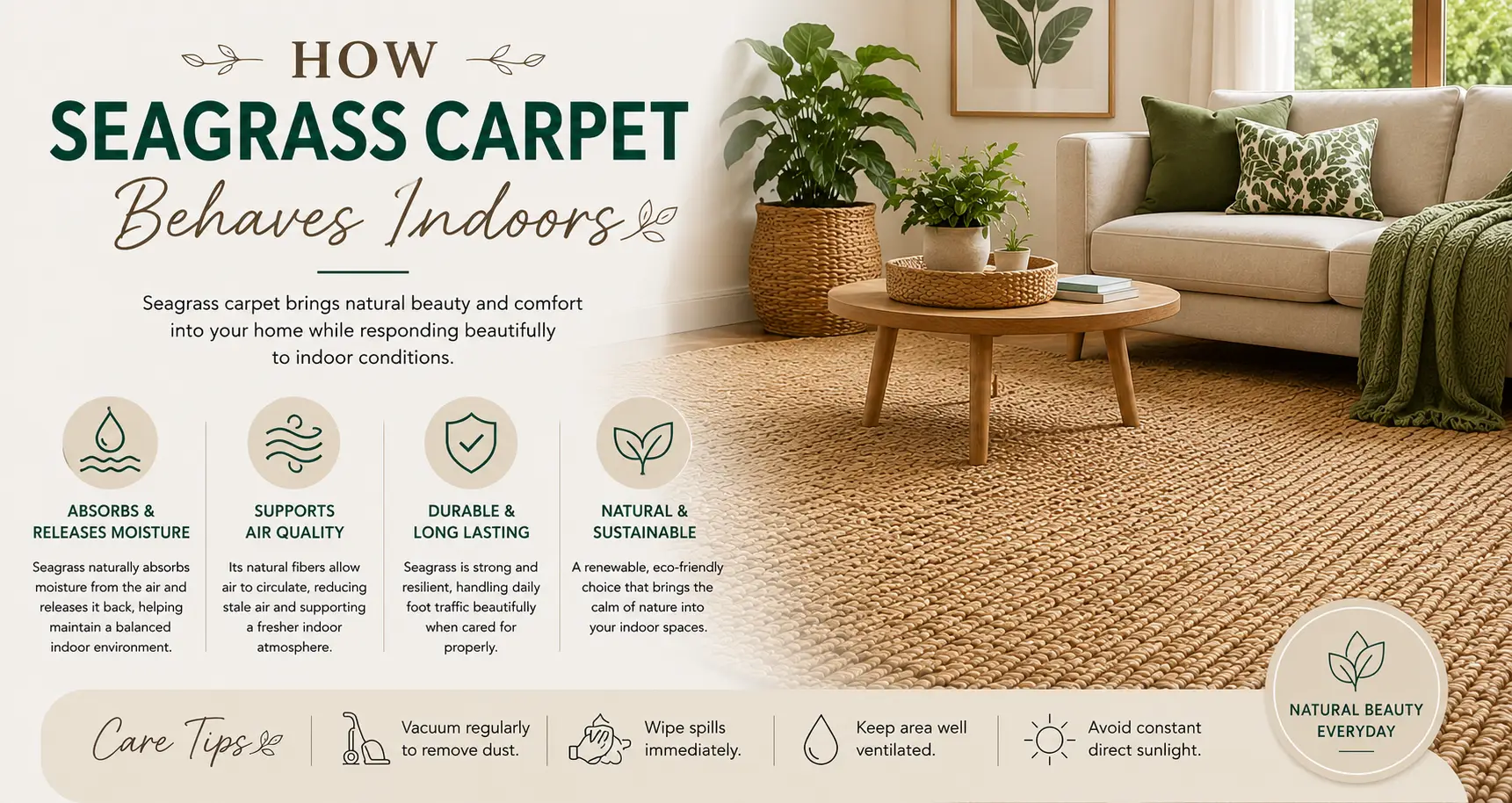
How Seagrass Carpet Behaves Indoors
Seagrass is a bit different because it comes from Water-grown fibers (Seagrass carpet). It has a slightly waxy surface feel, which makes it behave differently compared to sisal and jute. It doesn’t really absorb stains so quickly, so in Dubai, lots of people look at it like a practical option, for busy homes, you know.
It feels a bit firmer than jute, but in a way smoother than sisal, rather plainly. For daily use, it holds steady under furniture and foot traffic, so it doesn’t really shift or slide much. It also holds up better in slightly humid conditions compared to other natural options.
- Slightly smooth surface that feels easier underfoot compared to rough natural fibers.
- Naturally stronger resistance to minor stains in normal home use conditions.
- Works well in Dubai homes with air-conditioned indoor environments.
- Keeps the shape stable even with regular walking and light furniture movement.
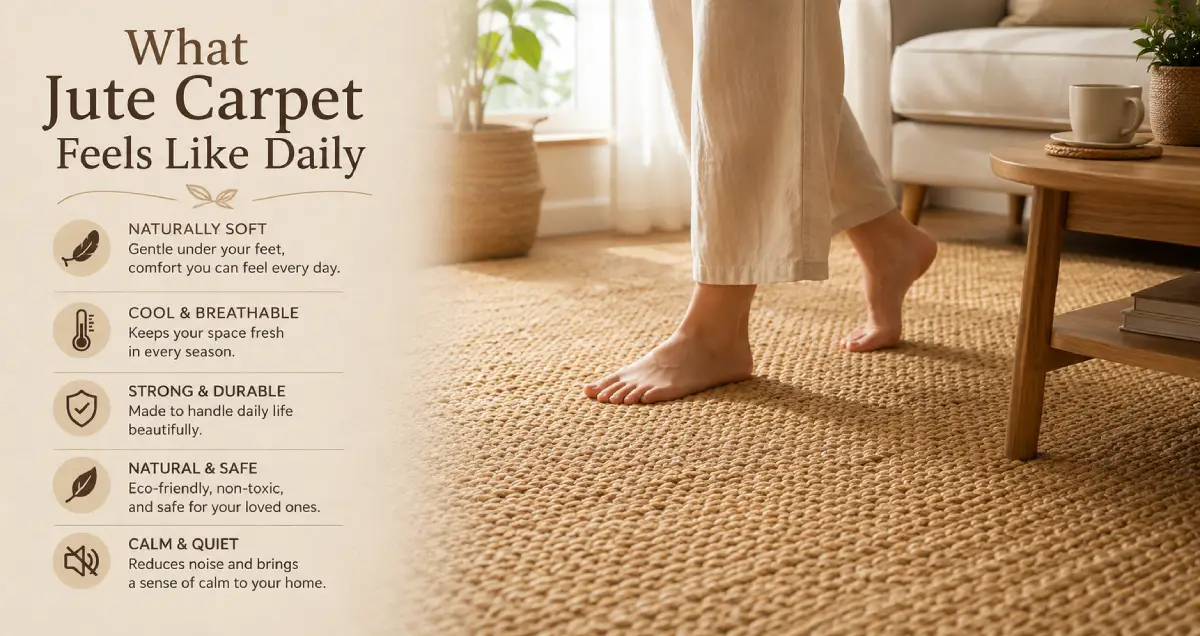
What Jute Carpet Feels Like Daily
Jute comes from the Corchorus plant, yes, the jute itself, and it kind of feels like the softest of the three materials. When you step on it, you get this light, warm sort of sensation, but it really is not meant for the spots that get lots of traffic or heavy use, you know. It’s more like, for calmer areas where it can stay comfortable and not get worn down too fast. It is more like a comfort and visual thing rather than pure strength.
In Dubai homes, jute carpet is usually placed in those quiet zones, like bedrooms, or tucked in the corners where people walking around is low. It reacts a bit more to moisture than sisal and seagrass, so it does need extra attention on humid days… because otherwise it can wear out quicker.
- Soft underfoot flooring that feels light and comfortable in calm indoor spaces.
- Natural warm texture that adds a relaxed feel to bedroom or lounge areas.
- More sensitive to moisture compared to other natural fiber options in UAE homes.
- Best used in low-traffic spaces where design and comfort are more important.
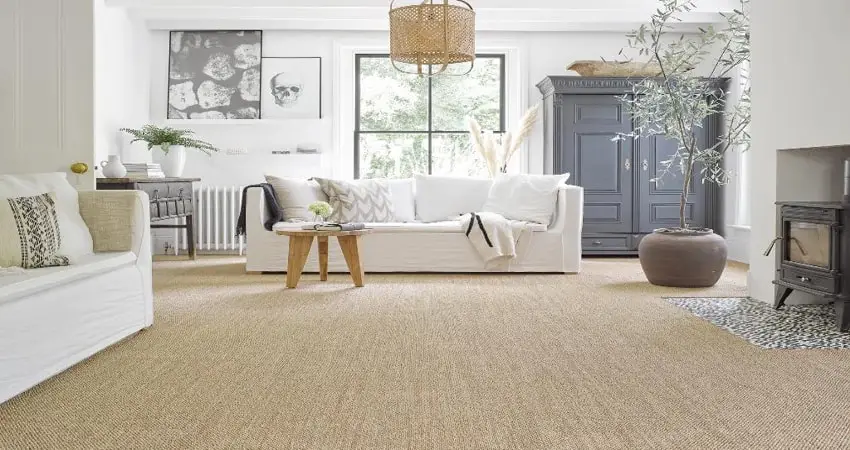
Durability Comparison in Simple Terms
When people put these three side by side, it mostly ends up being about how long they can stick around and also how they behave when things get tense, like under pressure and all that. Sisal is strong but firm. Seagrass is stable and slightly more balanced. Jute is soft but less durable in busy spaces.
In Dubai conditions, durability also depends on indoor cooling and moisture control. That’s why the same carpet can behave differently in different homes.
- Sisal gives strong structure but stays firm under long-term daily walking pressure.
- Seagrass stays balanced with moderate strength and better surface stability.
- Jute feels soft, but it shows wear faster in high-traffic areas over time.
- Choice depends on how much daily movement the flooring needs to handle.
Stain and Moisture Response
This is where the difference becomes very clear. Seagrass performs better against light stains because of its natural surface. Sisal reacts more quickly to moisture, so spills need faster cleaning. Jute absorbs more, so it is more sensitive overall.
For Eco-friendly flooring Dubai, people often try to balance how it looks with how easy it is to maintain in real life, not only on appearance… like in day-to-day living.
- Seagrass handles light stains better due to its natural wax-like surface.
- Sisal needs quick cleaning when exposed to moisture to maintain its structure.
- Jute absorbs liquid faster and requires more careful handling in daily use.
- All three need dry conditions to stay stable in Dubai home environments.
Softness and Walking Comfort
Comfort is usually where opinions split. Jute kinda feels the softest, while sisal comes off as the firmest. Seagrass sits in between, sort of. If someone is walking barefoot often, jute feels more relaxed. But if the goal is stability and clean structure, sisal wins.
In many Dubai homes, this choice depends on how the room is used daily.
- Jute gives a soft underfoot feeling suitable for calm indoor relaxation areas.
- Seagrass offers a middle-ground feel between softness and firm structure.
- Sisal feels firm and steady, better for design-focused flooring layouts.
- Comfort level depends on personal preference and room usage style.
Moisture Performance in Dubai Climate
Dubai’s weather is hot, but the inside humidity still matters a bit. This is the reason why moisture-resistant carpets start becoming important, especially in those rooms. Seagrass naturally handles slight moisture better. Sisal is more sensitive, and jute needs more care in humid corners.
Air-conditioned homes reduce risk, but material behavior still matters over time.
- Seagrass performs better in slightly humid conditions compared to other natural fibers.
- Sisal needs stable, dry indoor conditions to maintain long-term structure.
- Jute reacts faster to moisture and needs careful placement inside homes.
- Proper ventilation improves the lifespan of all natural fiber flooring options.
Style and Interior Match
All three fibers fit different styles. Sisal matches minimal and modern interiors. Seagrass fits balanced natural themes. Jute gives a softer, more relaxed home feel. That’s why designers often mix them based on the room’s purpose.
For Eco-friendly flooring Dubai, the look is just as important as function.
- Sisal fits clean modern interiors with simple and natural design themes.
- Seagrass blends well with neutral and balanced interior decoration styles.
- Jute adds warmth to relaxed home spaces like bedrooms and lounges.
- Each fiber supports a different interior mood and visual direction.
Final Simple Understanding
If you want strength and structure, sisal usually fits. If you want balance, seagrass works well. If you want softness, jute feels better. None of them is “best” for everything. They all behave differently once they are inside a real Dubai home. Most people choose based on room use, not just looks.
- Sisal suits structured and simple interior-focused flooring needs.
- Seagrass suits balanced use with better stain response.
- Jute suits comfort-based rooms with low movement activity.
- Final choice depends on the lifestyle, and the room function, kind of.
FAQs
Which natural fiber is strongest?
Sisal is generally stronger and kind of more stable for everyday use, as you would notice. It’s the kind of fiber that just holds up better, mostly.
Which one feels softest under the feet?
Jute feels the softest compared to sisal and seagrass.
Is seagrass good for Dubai homes?
Yeah, it kinda works pretty well inside, especially in air-conditioned areas where the room stays steady and cool most of the time.
Which carpet handles stains better?
Seagrass handles light stains better than the other two.
Can these carpets be used in bedrooms?
Yes, especially jute and seagrass for a softer bedroom feel.